How to Split Bills With Roommates
To split bills with roommates, agree on a rule for each bill before the billing period, record the service dates, amount, payer, and each person’s share, then reconcile paid-versus-owed balances on one shared settlement date. Keep personal purchases out of the shared ledger. For rent, utilities, and any bill governed by a lease or local rule, follow the applicable written terms; an informal roommate formula does not replace them.
Set up the household rules before the next bill
Start with a short list of recurring charges: rent, electricity, water, gas, internet, and any household subscription the group has agreed to share. For each line, write down who is included, what period the charge covers, and how the group will divide it. Do not put every charge under one blanket “utilities” rule if the people, dates, or terms differ.
Make three buckets:
- Shared recurring bills: charges everyone agreed to share, such as a common internet plan or a household utility account.
- Personal charges: a roommate’s own subscription, optional add-on, or purchase that the others did not agree to share.
- One-time shared costs: household supplies or a repair item the group has agreed to buy together. Record these separately from a provider bill so nobody mistakes them for a utility charge.
For each shared recurring bill, decide whether the shares are equal, itemized by use, or weighted under an arrangement everyone accepts. Equal shares are simple when the group chooses equal participation. Itemized shares fit a purchase with identifiable personal and shared parts. An income-weighted method is a separate household agreement, not something to infer from different paychecks. If you need help distinguishing those methods, see the site’s equal, itemized, and income-based comparison.
Write down the rule and the date it starts. Include how the group will handle a new roommate, a move-out, a late bill, a refund, or a corrected statement. A line such as “split everything equally” leaves open whether it includes a personal add-on, a period before someone moved in, or a credit from an earlier month.
Keep one dated record for every charge
Use one row per bill or shared purchase. A practical record contains:
| Field | What to record |
|---|---|
| Bill and period | Provider or item name, statement date, and service dates |
| Total and currency | The amount shown on the statement or receipt |
| Included people | Who agreed to share this specific charge |
| Split rule | Equal, itemized, measured use, or another agreed method |
| Paid by | The person who actually paid, and the amount paid |
| Each person owes | The amount assigned to each participant under the chosen rule |
| Proof and status | Receipt or statement location, payment date, and whether the row is settled |
Keep the statement or receipt with the row. If an amount includes a deposit, credit, late fee, tax, or personal add-on, label it rather than burying it in the total. Do not store account passwords or full payment-card details in a shared bill sheet.
If the provider changes a bill after an estimated reading, adjust the entry for that same service period instead of adding the corrected total as though it were a second month. The dedicated corrected utility-bill guide explains that narrower case.
Reconcile what each person paid with what they owe
For each roommate, total the payments they actually made, then subtract the amount assigned to them. In this guide, net balance = paid − owed. A positive balance means the household owes that person; a negative balance means that person still needs to pay. This is bookkeeping for an agreed split, not a decision about who is legally responsible to the provider.
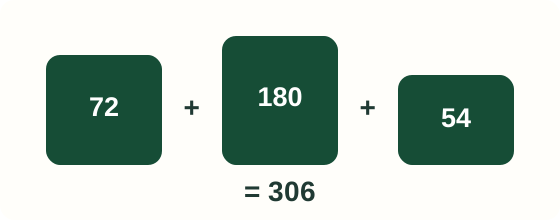
Example assumption: three roommates agree to share a month’s internet, electricity, and water charges equally. The internet bill is $72, electricity is $180, and water is $54. The shared total is $72 + $180 + $54 = $306, so each person’s agreed share is $306 ÷ 3 = $102. These are invented amounts for arithmetic only, not typical bills or a recommendation that every household split utilities equally.
Example assumption: Roommate A paid the $72 internet bill and $54 water bill, or $126. Roommate B paid the $180 electricity bill. Roommate C paid $0. A’s net is $126 − $102 = +$24; B’s net is $180 − $102 = +$78; C’s net is $0 − $102 = −$102. The balances total $24 + $78 − $102 = $0. To settle, C sends A $24 and B $78. After those transfers, each person has paid $102 toward the agreed $306 total. If a $15 streaming add-on belongs only to A, keep it outside the $306 unless the group separately agreed to share it.

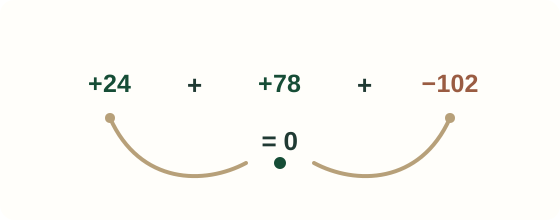
These transfers are an example of a ledger result, not a payment instruction. Confirm the statement totals and the group’s agreed shares before sending money. A blank shared-bill CSV ledger is available if you want to record rows outside this page.
Close the ledger on a predictable schedule
Pick one review date after the ordinary statements for the month arrive. On that date:
- Add each statement once, using its service period rather than the date someone happened to open the email.
- Mark who paid and attach or link the statement.
- Apply the rule recorded for that bill; do not change methods halfway through because one result looks more convenient.
- Calculate each person’s paid-minus-owed balance across the rows being settled.
- Record the transfer when it actually happens, then mark the related balance settled.
If a statement arrives late, leave that row open for the next review rather than guessing the amount. If a roommate disputes one charge, show the source bill and the calculation; keep an undisputed balance visible instead of silently rewriting the original row. If the bill itself changes, retain the old and corrected amounts in the same bill history so the correction can be traced.
For move-in or move-out periods, agree in advance which dates count for each category and write the dates in the record. A rent clause, utility provider’s service period, and one-time household purchase may use different boundaries. Do not assume that an absence automatically cancels a fixed charge or that an occupancy-day estimate measures actual electricity use. If there is a separate meter, use the applicable reading and provider rule; if there is not, label any agreed proxy as an estimate.
Quick answers for roommate bill questions
How to split bills with a roommate
For two people, use the same record with two participant columns. Divide each shared line by the agreed rule, include what each person already paid, and settle only the remaining difference.
How to split utility bills with roommates
Read the statement’s service period and line items first. Separate any personal charge or credit, then apply the agreement for the people and dates covered; do not treat a roommate formula as a universal legal rule.
How do roommates split bills
Roommates can choose equal shares, itemized use, or another method they all accept. The useful step is to write the choice next to each bill before the group starts paying it.
How to divide bills between roommates
For an equal split, divide the agreed shared amount by the number of included people. For another method, show the inputs and each person’s resulting share so the amounts add back to the bill total.
How to divide electricity bill between roommates
Use individual meter readings only when the meter and provider’s billing rules support that calculation. With a shared meter and no individual readings, choose and record a proxy together; do not describe it as measured consumption.
How to split bills between roommates
Record the bill total, people included, rule, payer, and amount owed per person. Then subtract each person’s assigned share from the payments they made to find who owes or receives money.
How to split costs with roommates
First decide whether the purchase is shared or personal. Put a shared household item in the group ledger and assign a personal item only to the person who chose it unless the group agreed otherwise.
How to split electric bill with roommates
Start with the electricity statement and its dates. If you use a proxy because there are no individual readings, label the proxy and keep it distinct from the provider’s actual kilowatt-hour data.
What a written roommate agreement can document
Campus and municipal housing guidance converges on making bill arrangements explicit and written. UC San Diego tells roommates to “Decide how monthly bills … will be divided,” identify who makes sure the bill is paid, track who paid utility deposits, and sign an agreement. The University of Rhode Island asks roommates to “Agree on due dates, payment methods, and who will manage each bill”; its guide describes the agreement as a shared reference when memories or schedules change. The City of Boulder lists each roommate’s portion of rent and utilities as agreement content. Indiana’s tenant handbook advises roommates to “put in writing any agreements you have—such as how you will divide bills and rent—signed and dated by both you and your roommate.” These sources support a specific point: put the split and each person’s role in a record both roommates can revisit. They do not establish that every household should divide every charge equally. The guides differ in location and audience, so their recommendations should not be mistaken for a nationwide legal requirement.
A Columbia University roommate-agreement form shows how a bill-specific record may name the person holding the electricity or gas account and the date another roommate’s share is due. It gives separate fields for electricity/gas and internet/cable, rather than treating all costs as one undifferentiated amount. That document is a sample form, not a statute or a required contract. Its value here is narrower: it demonstrates that the account holder, the internal share, and the due date can be written down separately. The University of Rhode Island guide also asks roommates to state payment methods and who will manage bills, while Boulder’s agreement checklist identifies each roommate’s share. Taken together, these published examples support documenting the terms needed to understand a particular bill, without prescribing the same fields or formula for every home.
Keep the lease, utility account, and roommate split distinct
The sources distinguish an internal roommate arrangement from the documents governing a landlord or utility account. Boulder’s handbook states, “The roommate agreement is just that: an agreement among the roommates,” and says it is not binding on the landlord; the lease is the agreement between the tenants who signed it and the landlord. Ohio’s Office of the Consumers’ Counsel says, “the person’s name that is on the utility account is who is responsible for the bill.” Its tenant guidance separately describes master-metered buildings, where a landlord may allocate a building charge among units using factors such as square footage or occupants. Those are Ohio utility-account and landlord-to-unit examples, not a rule for how roommates inside one unit must reimburse each other. California’s Department of Real Estate describes a different state-specific shared-meter context: shared meters must be disclosed, tenants may ask how charges are apportioned, and the guide says, “The landlord and tenant should discuss and agree upon which party will be responsible for paying the shared utilities.” It also says a landlord cannot charge more than actual utility cost. These sources support checking the actual lease, account, and bill before treating an agreed roommate share as the amount owed to a provider. The cited state rules do not supply a single nationwide roommate formula.
A roommate spreadsheet therefore answers a narrower question than a lease or provider account: it records what the household agreed to reimburse one another. The cited Boulder guidance expressly separates that agreement from the landlord’s lease; Ohio’s consumer counsel identifies the utility account holder’s responsibility to the provider; and California’s guide addresses landlord billing where meters are shared. Those distinctions matter when the name on the provider account, the person who paid, and the people who agreed to share a charge are not the same. The sources do not say that a roommate ledger changes the customer of record, amends a lease, or overrides local allocation rules. Keep the statement and the household record side by side, and check the relevant lease and local utility rules where a charge is landlord-allocated or a meter is shared. The last sentence is a practical recordkeeping implication, not legal advice or a claim that one state’s rules apply elsewhere.
Make each month checkable from the original bill
Official guidance also supports checking the provider statement rather than relying only on a number passed through a group chat. Ohio’s Office of the Consumers’ Counsel tells renters to read utility bills each month, look for unusual charges, and track normal electricity or gas use. UC San Diego’s roommate guidance says to keep track of who paid utility deposits, and the University of Rhode Island asks roommates to agree on the bill manager and payment dates; it specifically suggests a shared tracker when bills are late. Boulder’s tenant handbook recommends that both sides keep records of emails, text messages, notes, and photos, and that agreements be made specific and put in writing. The four sources point to a checkable record: retain the provider statement, identify the household member who paid, and preserve the agreed share and payment date. Their advice is not a requirement to use a spreadsheet, one particular app, or one monthly closing date.
The materials also show why a correction should be traceable to the statement it changes. Ohio’s consumer guide tells renters to understand line items and look for unusual charges; California’s real-estate guide says a tenant may ask how a shared-meter charge was apportioned and says the landlord cannot bill more than actual utility cost. Boulder’s handbook recommends written, specific communications, and URI advises roommates to document relevant agreements and payments when a bill-sharing problem persists. These are examples from Ohio, California, and Colorado/URI guidance, not evidence that every provider uses the same billing cycle or correction process. They support asking which original statement, service period, and allocation explanation a household is discussing before entering a reimbursement amount. The page’s row-by-row ledger and monthly reconciliation steps remain a proposed way to apply that advice, not a format mandated by the cited sources.
When a roommate’s share and lease liability differ
Several tenant handbooks warn that roommates’ private division of rent does not necessarily limit what a landlord may seek under a signed lease. Boulder’s city handbook explains joint-and-several liability for lease signers in its local guide and says the roommate agreement cannot change lease rules. Longmont’s rental-property handbook likewise distinguishes the roommate agreement from the lease and describes lease-signing tenants’ liability for rent when a roommate leaves without paying. Indiana’s tenant handbook says some leases make the remaining tenant responsible for the full rent when a roommate does not pay, and it separately advises putting bill and rent division agreements in writing. The Georgia Landlord-Tenant Handbook describes a similar potential result for people in a landlord-tenant relationship, subject to what the lease says. These are location-specific explanations of lease risk, not a statement that all U.S. leases have identical terms or that every unpaid utility balance is treated like rent.
For a household ledger, the safe factual distinction is between an internal share and an external obligation. The City of Boulder says its roommate agreement is not binding on the landlord; the Georgia handbook says landlord collection depends on who is actually a tenant under the lease; and the Indiana guide tells renters to review the lease’s terms. A written record can show what roommates agreed to pay each other, but these guides do not establish that it releases a signer from a lease or changes a utility account. Before a roommate moves out, is replaced, or stops paying, read the actual lease and contact the landlord or provider about any required account or lease change. This page does not determine legal liability for a specific address or contract.
Page method, not an industry standard: Use the bill-by-bill ledger and paid-minus-owed reconciliation above only to apply the household’s documented agreement; where the agreement or bill terms do not resolve a boundary, the roommates must agree or get qualified local advice.
Limits and existing site tools
The steps and worked arithmetic above are this page’s proposed recordkeeping method; they are not a legal rule or a claim that every roommate group should choose equal shares. This guide is about coordinating an agreed household ledger. It does not calculate a provider’s tariff, interpret a lease, create a shared account, store payment history, or send money. Use the bill split calculator for a single calculation, the multiple-payer settlement example for one bill with several payers, and the roommate utility-bill correction guide for a provider’s later correction.
Official source pages checked by direct GET on November 7, 2026: UC San Diego roommate guidance; University of Rhode Island roommate guide; City of Boulder tenant handbook; Indiana tenant handbook; Columbia sample agreement; Ohio Consumers’ Counsel utility factsheet; Ohio utility guide; California Department of Real Estate guide; Longmont rental handbook; and Georgia Landlord-Tenant Handbook. Each source is limited to its stated location or sample-form scope. All dollar values are hypothetical example assumptions.